Showing posts with label Philosophy Figure. Show all posts

Ibn Al Haitham Biography - Wise Men In The West


Ibn Haitham or All real name Abu Muhammad al-Hassan Ibn al-Haitham, or wise men of the West, he is known as Alhazen, Ibn Haitham was born in Basra in 965 AD along with the 354H, and he died in Cairo in 1039 AD, when he was 74 years old, was an Islamic scholar who is an expert in the field of science, astronomy, mathematics, geometry, medicine, and philosophy . He also did a lot of investigation into the light, and has given inspiration to western scientists like Boger, Bacon, and Kepler in creating the microscope and telescope ..

Period of Islamic scholars

Islam is often given image as a backward religion and rewind. Islam also said not to encourage his people demanded and master various sciences field. The reality and the picture given is not only not true but conflict with the actual history.

History has proven how much of the Islamic world has produced many scholars and scientists group was simply superb in the field of philosophy, science, politics, literature, society, religion, medicine, and so on. One characteristic that can be seen in the figures is that they are not Islamic scholars simply can master the art at a young age, but in a short time to master multiple disciplines simultaneously.

Although it's more recognizable figures in science and medicine but he also has a high proficiency in the field of religion, philosophy, and so on. One of the character than is Ibn Haitham or All real name Abu Muhammad al-Hassan Ibn al-Haitham.

The journey of life

In the wise men of the West, he is known by the name of Alhazen. Ibn Haitham was born in Basra in 965 AD along with the 354H. He started his early education at Basrah before sworn in as a government employee in his native port. After a while submissive with the government there, he took the decision to migrate to Ahwaz and Baghdad. In the colony he has continued teaching and concentrating on writing.

His passion for science has brought emigrated to Egypt. While there he had taken the opportunity to do some investigative work on the flow of the Nile River and drains as well as copying of books on mathematics and astronomy. The goal is to get the money back on the way to the University of Al-Azhar.

Results rather than effort, he has become a very proficient in science, astronomy, mathematics, geometry, medicine, and philosophy. The writing on the eyes, has become one of the important reference in the field of teaching science in the West. In fact, her study of the treatment of the eye has been a principle to the study of modern medicine on the eye.

The work and research
Ibn Haitham is a scientist who likes to do the investigation. Investigation of the light has given inspiration to western scientists like Boger, Bacon, and create a microscope and telescope Kepler. He was the first person to write and meet various important data about the light.

Some of the books he wrote about the light has been translated into English, which is Light and On Twilight Phenomena. Membahaskan many studies about dusk and halos around the moon and the sun and shadow, and the eclipse.

According to Ibn Haitham, the light of dawn begins when the sun is on the line 19 darjah on the eastern horizon. The red color in the evening too would be lost if the sun is in the line 19 darjah western horizon. From his studies, he has also been successful as a light position bias produces light and reversing light.

Ibn Haitham also participating in the percubaan the glass burned and thence terhasillah theory magnifying lens. The theory has been used by scientists in Italy to produce the first magnifying lens in the world.

Even more amazing is that Ibn Haitham has met the content cohesive principle of air before a scientist named Trricella know that 500 years later the case. Ibn Haitham also met kewujudan pull of gravity before Newton Issaac know. Moreover, the theory of Ibn Haitham about the human soul as a series of feelings in a row on a regular basis has given inspiration to western scientists to produce a puppet figure. His theory led to the discovery of a film that later joined in a row and played to the audience as we can tontoni today.

Philosophy

In addition to science, Ibn Haitham also wrote about philosophy, logic, metafizik, and issues relating to religion. He co-authored the review and summary of the works of earlier scholars.

Many philosophical writing is concentrated on the aspect of truth in matters of dispute. Dissension and schism her case about something berpunca than the approach used in recognized.

He also argues that free is only one truth. Therefore all reasonable charges diragui truth in assessing all views are available there. Thus, his view of the philosophy is very interesting to highlight.

For Ibn Haitham, philosophy can not be separated rather than mathematics, science, and divinity. All of the three fields and disciplines should be mastered and to hang someone that needs to use his youth to the fullest. If age is increasing, and mental strength will help fizikal decline.

Work

Ibn Haitham proved his views if he so ghairah seek and explore science at a young age. So now he triumphed produced many books and papers. Among his books include:

1. Al'Jami 'fi Usul al'Hisab which contains metametik science theories and metametik penganalisaannya;
2. Kitab al-tahlil wa al'Tarkib about geometry;
3. Book tahlil ai'masa ^ il al 'Adadiyah of algebra;
4. Maqalah fi Istikhraj SIMAT al'Qiblah who investigated the Qiblah direction for the entire shoreline;
5. FIMA M.aqalah Tad'u llaih on the use of geometry in syarak and legal affairs
6. Minutes of Sina'at fi al-Syi'r about poetry writing techniques.

Ibn Haitham donation to science and philosophy very much. Kerana that Ibn Haitham recognized as a poor man but rich in terms of material science. Some of the views and opinion is still relevant so to this day.


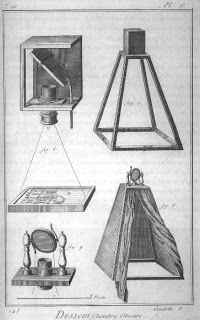
Camera Obscura (the Latin for dark room), the development of Ibn Al Haitham findings are based on the principle of capturing light reflected from an object.

Nevertheless partly his longer had "stolen" and "diceduk" by Western scientists without providing a reasonable appreciation to him. Indeed west should thank Ibn Haitham and his deep Islamic scholars without their chances European world was covered with darkness.

Ibn Haitham studies have provided the foundation for the development of science and at the same time his writings on the philosophy of thinking has proved the authenticity of Islamic scholars in the discipline are no longer shackled by the thought of Greek philosophy.


Ref :http://id.wikipedia.org/wiki/Ibnu_Haitham

thanks for your visit my blog biographyzone and for your reding this article Ibn Al Haitham Biography - Wise Men In The West
Description: Ibn Al Haitham Biography - Wise Men In The West
Rating: 5
Reviewer: 98827 review
Item Reviewed: Ibn Al Haitham Biography - Wise Men In The West

Mao Zedong Biography - Founder Poeple's Republic Of China

Mao Zedong Biography
Mao Zedong (Hanzi: 毛泽东) (born in Shaoshan, Hunan, December 26, 1893 - died in Beijing, 9 September 1976 at the age of 82 years), was a prominent philosopher and founder of the People's Republic of China. He is one of the most important figures in the history of modern China

Born in a poor peasant family, Mao since childhood to work hard and life is concerned. Although in later life increased family economic circumstances, but the misery in childhood that influenced later life. When small, Mao was sent to study at the elementary school. Childhood education also includes classical Confucian teachings. But at age 13, his father told him to stop going to school and working in the fields.

Mao rebellious and determined to complete his education so that he was desperate to run away from home and continue their education elsewhere.

In 1905, he joined the state exam at that time began removing the old Confucian ideologies; replaced by Western-style education. This marks the beginning of an intellectual uncertainty in China.

In 1911, Mao engaged in the Xinhai Revolution was a revolution against the Qing dynasty that resulted in the collapse of the Chinese empire that has ruled over 2000 years since 221 BC. In 1912, the Republic of China was proclaimed by Sun Yat-sen and China officially entered the era of the republic. Mao then continue their education and learn a lot of things, among other western cultures. In 1918 he graduated and then attended the University of Beijing. There he will meet with the founders of the Marxist CCP.

Mao and the party is
Mao in Yan'an in 1946

The party was founded in 1921, Mao and Mao are increasingly vocal. Between the years 1934 - 1935 he held the lead role and lead the Chinese Red Army undergoing "Mars Long". Then, since the year 1937 he joined the Army to help fight the Dai Nippon occupied many regions of China. Finally, World War II ended and the civil war flared up again. In the war against the nationalists, Mao became the leader of the Reds and eventually it won in 1949. On October 1, 1949, the People's Republic of China was proclaimed and the nationalist Chinese leader; Chiang Kai-shek fled to Taiwan.

In Mao CCP itself since 1943 and is chairman of the secretariat of the party Politburo but in fact it controls the rest of the party until his death in 1976. Leadership may not be vulgar cruel as Stalin but violence and behavior policies that arbitrarily himself brought the Chinese people plunged into ruin and misery incredible.

Philosophy of Mao
Mao Zedong in 1936

Mao is actually not an original philosopher. The ideas are based on socialism fathers such as Karl Marx, Friedrich Engels, Lenin and Stalin. But he had a lot to think about dialectical materialism is the basis of socialism and the application of these ideas in practice can be regarded as Mao done original. Mao could also be said of a Chinese philosopher whose influence is greatest in this 20th century.

Mao's most important philosophical concept is conflict. He said: "The conflict is universal and absolute, it is in the process of development of all goods and possess all the process from beginning to end." Model of history Karl Marx was also based on the principle of conflict: the oppressed class and the oppressed class, capital and jobs are in a eternal conflict. At some point this will lead to a crisis and the workers will win. In this new situation will eventually lead to a crisis yet, but logically all processes ultimately by Mao, will lead to a stable and harmonious balance. Mao thus argues that all conflicts are universal and absolute, so in other words are timeless. Mao's concept of conflict no resemblance to the philosophical concept of yin-yang. It all sounds like a dogmatic belief. Below is a snippet of his thoughts on the conflict.
Mao Zedong

In science everything is broken down by a particular conflict inherent to the objects of their research. Conflict thus constitute the basis of some form of scientific disciplines. Here can be presented a few examples: positive and negative numbers in mathematics, action and reaction in mechanics, electricity and negatifa positive in the physical sciences, attraction and repulsion in chemistry, class conflict in the social sciences, attack and defense in science war, idealism and materialism and dialectical perspective in metaphysics and philosophy of science, and so on. It's all research object science disciplines in different because each discipline has a specific conflict and the essence or gist of each.

Examples given by Mao Zedong on 'conflict' in different disciplines took from Lenin. Some of the analogies are appropriate but others do not. Numbers of positive and negative is a bad example of the dialectics of Marxism because of their differences are not dynamic: there are only the numbers of positive and negative that have emerged. Opinion Mao into doubt when he says that 'konflik'-' conflict 'is the' essence 'rather than science discipline concerned. Positive and negative numbers are not the essence of mathematical sciences, as well as metaphysics and dialectics is not the essence of philosophy. Mao is someone who is educated and understanding-understanding can be explained by the wrong because he was obsessed with the concept conflicts. This obsession also affect his political decisions as will be discussed in more detail below.
The concept of Yin Yang affect philosophical view of Mao Zedong.

Mao second important concept is the concept of the knowledge which he also took from Marxism. Mao found an advanced knowledge of the physical experience and that experience was the same as the engagement.

If you seek knowledge then you have to engage with the state of the changed situation. If you want to know how it feels a cashew, guava then it should be changed by way of eating. If you want to know the structure of the atom, then you must perform experiments of physics and chemistry to change the status of this atom. If you want to know the theory and metoed revolution, then you should follow. All true knowledge comes from direct experience.

Only after someone get experience, then he could jump to the front. After that pengathuan practiced back that makes people get to experience it again and so on. Here it was shown that Mao Marxism not only recognize but also understand neokonfusianisme as suggested by Wang Yangmin who lived in the 15th century to the 16th century.

The politics and policies of Mao

Mao distinguish two types of conflict; conflict of antagonistic and non-antagonistic conflicts. Antagonistic conflict can only be solved according to the battle alone while the non-antagonistic conflict can be resolved by a discussion. According to Mao conflict between the workers and the workers with the capitalists is an antagonist of the conflict while the conflict between the people of China to the party is a non-antagonistic conflict.

In 1956, Mao introduced a new policy in which intellectuals should expend their opinion as compromises to the party who pressed for wanting to avoid the violent suppression accompanied by the motto: "Let a hundred flowers flourish and hundred different thoughts contend." But ironically policy This political failure: the intellectuals are not satisfied and spend a lot of criticism. Mao himself argued that he had been betrayed by them, and his revenge. Approximately 700,000 members of the intelligentsia ditangkapinya and forcibly put to work in rural areas.

Mao believed in the eternal nature of a revolution. He also believes that every revolution inevitably produce the counter-revolutionaries. Therefore, he regularly combating and capturing what he considers his political opponents and the traitors or the counter-revolutionaries. The most dramatic event and the tragic events of the Cultural Revolution is the heart that occurred in 1966. In 1960 students around the world are in happy-happy rebel against what they consider the Establishment or the ruling. Similarly, in China. The difference in China they are supported by their teachers and dignitaries of the Party, including Mao himself. The students and faculty set up what is called the Red Guard, a paramilitary unit. Equipped with the Red Book of Mao, they attack the minions of capitalism and Western influences, and other counter-revolutionaries. As an example of their fanaticism, among other they refuse to stop on the highway when the red light is on because they believe that the color red, which is a symbol of socialism might not mean something to stop. So the members of the Red Guard in 1966 so blindly in combating the counter-revolutionary that the Chinese state in an extremely precarious and almost destroyed; ekonominyapun beaten path. Mao finally forced to People's Liberation Army to tackle them and block their fanaticism. The result was a civil war that only ended in 1968.
Mao Zedong
Mao Zedong Biography
Failure Mao

In 1958 Mao launched what he called the Great Leap Forward in which reorganized rural areas in total. Everywhere established associations villages (communes). Economically it turns out it's all failed. These communes into units that are too large and can not be terurusi. Estimated to be nearly 20 million people died in China at that time wasted

Mao Zedong and the UN
Mao Zedong proclaimed the People's Republic of China on October 1, 1949.

People's Republic of China was proclaimed by Mao since in 1949 was not recognized by the United States. United States continue to recognize the Nationalist Republic of China since 1949 only controlled island of Formosa or Taiwan and beyond. China since the founding of the United Nations in 1945 has become a permanent member of the Security Council along with the United States, United Kingdom, France and the Soviet Union (Russia) as the winner of World War II, continued to be represented as well. Just who is representing the nationalist government that ruled Taiwan is now only just. It is a strange time for the Chinese mainland was inhabited approximately 800 million people are not represented in the United Nations; representing only course which at that time Taiwan has a population of probably no more than 10 million people.

So at the end of the 1960s the president of the United States, Richard Nixon, began to approach the People's Republic of China and the Soviet Union ended with the approval of PRC to the UN Security Council began in 1972 and replaced Taiwan.

Legacy of Mao and the People's Republic of China is currently

In 1976 Mao Zedong died. After that the People's Republic of China to be more open. Normalization of diplomatic relations with Indonesia are also realized in 1992. At this time China appears as a giant just woke up from his sleep and rapid economic growth. Even China could surpass Russia in its development. Things contested now is whether all this can be achieved thanks to Mao services or because the effect is thin.

Ref : http://id.wikipedia.org/wiki/Mao_Zedong

Thanks for your visit and red this article Mao Zedong Biography - Founder Poeple's Republic Of China
Description: Mao Zedong Biography - Founder Poeple's Republic Of China
Rating: 5
Reviewer: 98827 review
Item Reviewed: Mao Zedong Biography - Founder Poeple's Republic Of China

Soe Hok Gie Biography - Litterateur From Indonesian


Soe Hok Gie is a person of Chinese descent who was born on December 17, 1942 (born in Djakarta, December 17, 1942 - died on Mount Semeru, December 16, 1969 at the age of 26 years). A son of the couple Soe Lie Pit-a novelist-with Nio Hoe An. Soe Hok Gie is the fourth of five children of the family Soe Lie Piet aka Salam Sutrawan, Soe Hok Gie is the younger sister of Soe Hok Djie which is also known as Arief Budiman. Since still in school, and Soe Hok Gie Soe Hok Djin is frequently visited public libraries and some libraries on sidewalks in Jakarta.

Since still in school, and Soe Hok Gie Soe Hok Djin is frequently visited public libraries and some libraries on sidewalks in Jakarta. According to one researcher, since I was elementary school (SD), Soe Hok Gie even read the works of serious literature, such as works of Pramoedya Ananta Toer. Perhaps because his father was also a writer, so do not be surprised if he was so close to the literature.

After graduating from elementary school, the brothers chose different schools, Hok Djin (Arief Budiman) chose to go Canisius, while Soe Hok Gie choose a school in Junior High School (SMP) Strada Gambir area. That said, while sitting on the bench, he was a copy of a collection of short stories Pramoedya: "The story of Blora"-not stories Pram including rare at that time?

At the time of the second grade at the school this menangah, Soe Hok Gie bad achievement. In fact he was required to repeat. But what Soe Hok Gie reaction? He did not want to repeat, he was treated unfairly. Finally, he chose to move the school from having to sit longer in school. A Protestant Christian schools allow him to enter the third grade without repeating.

Following from junior high school, she managed to get into Menengan School (SMA) Canisius literature majors. While his brother, Hok Djin, also went to the same school, but other majors, the natural sciences.

While in high school Soe Hok Gie is an interest in literature more deeply, and at the same time he became interested in the history of science. In addition, awareness berpolitiknya began to rise. From here, the beginning of an exciting journey of recording it; writing is sharp and full of criticism.

There are good things measured during studying in high school, Soe Hok Gie and his brother managed to graduate with high marks. Kemuidan sisters went to the University of Indonesia. Soe Hok Gie choose the faculty of arts majoring in history, while Hok Djin into the psychology faculty.

In the Gie is an activist college student. Many believe the movement Gie major effect on the fall of Sukarno and among the first to criticize sharply the New Order regime.

Gie very disappointed with the attitude of my friends are in the era contemporaries demonstrations in 66 criticize and condemn the government officials then after they pass pro to it and forget the vision and mission of the armed struggle 66. Gie indeed be difficult to oposisif and to compromise with the opposition.

It also co-founded Mapala Gie UI. One important activity is hiking. At 3.442m Slamet led mountain climbing, he cites Walt Whitman in his diary, "Now I see the secret of the making of the best persons. It is to grow in the open air and to eat and sleep with the earth ".

Thoughts and football terjangnya recorded in his diary. His thoughts about humanity, about life, love and death. Gie in 1968 had been to America and Australia, and his favorite LPs Joan Baez seized at Sydney airport for being anti-war and communist. Gie graduated in 1969 and continued to be a lecturer at his alma mater.

Together Mapala UI Gie planning to conquer Mount Semeru in height 3.676m. When Mapala seeking funding, many are asking why climb a mountain and Gie said to his friends:

"We explain what exactly our goal. We say that we are human beings who do not believe in the slogan. Patriotism is not likely to grow out of hypocrisy and slogans. A person can only love something healthy if he knew the object. And love my homeland Indonesia Indonesia can be grown along with familiar people up close. The growth of a healthy soul of the youth should also mean a healthy physical growth. That's why we go up the mountain. "

December 8 before leaving Gie could write a note: "I do not know what happened to me. Once I heard of the death of Kian Fong Arief last Sunday. I also had the feeling to always remember death. I want to chat-chat before saying goodbye to semeru. With Maria, Rina, and also wanted to make an intimate event with Sunarti. I guess this is the effect of the death of Kian Fong is so strange and so fast. "Hok Gie died on Mount Semeru in 1969 just a day before the birthday-27 from inhaling toxic fumes in the mountain. He died along with his partner, Idhan Dhanvantari Lubis. Further notes during the Mount Semeru disappeared along with the death of Gie on top of the mountain.

December 24, 1969 GIE buried in Menteng Pulo, but two days later was transferred to Kober cemetery, Tanah Abang. In 1975 Ali Sadikin unload Kober cemetery that had to be moved again, but the family refused and his friends had remembered that when he died his body should be burned and the ashes spread in the mountain. With these considerations ultimately Gie bones cremated and the ashes scattered on the top of Mount Pangrango.

Some of the quotes are taken from his diary Gie:

"A Greek philosopher once wrote ... best of luck is not born, second born but died young, and the tersial is old age. The feeling is so. Bahagialah those who die young. "

"Life now is really boring me. I feel like an old monkey confined to a zoo and not have to work anymore. I want to feel rough and tough life ... rubbed by a cold wind like a knife, cutting woods or walking and bathing in a small river ... people like us did not deserve to die in bed. "

"The most valuable and essential in life is to be loving, be compassionate heart, grief can be tasted ..."

In addition to records of a Demonstrator, another book written Soe Hok Gie is Transition Period, Under the Red Lantern (which I do not have) and the People Left at the Crossroads Road DR and scientific research. John Maxwell Soe Hok Gie: Intellectual Struggle Against Tyranny Young.

Next year Mira Lesmana and Riri Reza with Miles Productions will launch a movie called "GIE" which will be played by Nicholas Saputra, Sita Nursanti, Wulan Guritno, Lukman Sardi and Thomas Nawilis. Now in its post production stage.

Note a Demonstrator

John Maxwell commented, "Gie just a student with a background that is not too great. But he had the will involved in the movement. He always wanted to know what happened to his people. Though died young, he left many writings. Among the kinds of diaries and articles published in national newspapers "he said. "I interviewed Mira Lesmana (producer GIE) and Riri Reza (director). He came after reading my book. I hope the film will be a success. Because, if that happens, people will be more familiar with Soe Hok Gie, "he said.

Words Soe Hok Gie

  • The first question we have to answer is: Who am I? I have replied that I was an intellectual who did not pursue power but one who wants to declare the truth. And I am willing to face non-populeran, because there is something bigger: the truth.
  • As for me politics is the dirtiest item. Mud-dirty mud. But one day where we can not avoid myself again, then plunge.
  • Teachers who can not stand criticism allowed in the waste basket. Lord and Master is not always right, and the student is not buffalo.
  • Best of luck is not born, second born but died young, and that is the age old tersial. The feeling is so. Bahagialah those who died young.
  • I decided that I would stick with my principles. Exiled better than succumb to hypocrisy.
  • My greatest dream, I want to implement is, for Indonesian students develop into "ordinary human beings". Being young men and women and women who acted as a normal human being, as a man who did not deny the existence of life as a student, as a young man and as a human being.
  • I want to see students, when if he had a decision that has political meaning, no matter how small, is always based on the principles of the adult. Those who dare to express true as truth, and one as an error. And it does not apply the truth on the basis of religion, community organizations, or any group.
  • There are still too many students who minded snobs power. Whimpering when pressed, but the oppressive when in power. Concerned groups, organizations, friends and others seideologi. Every year my brothers came out of high school. They will become new victims to be deceived by such a student figures earlier.
  • World history is the history of extortion. Is without a history of extortion does not exist? Is no sadness, no betrayal, history will not be born?
  • For me the struggle must remain. Attempt removal of the blindness, to betrayal, to all the non-gala humanist ...
  • We seem to celebrate democracy, but cut the tongue of people who dare to express their opinion adverse government.
  • For me TRUTH despite how painful it better than hypocrisy. And we do not have to feel ashamed of their shortcomings.
  • Cut the legs and insert one's hand in a 2 x 3 feet and give him freedom. This is the freedom of the press in Indonesia.
  • To be a human is to be destroyed.
  • I do not want to be a bamboo tree, I want to be a bold oak tree against the wind.
  • I decided that I would be a demonstration. Because silence is a crime errors.
  • I'm not an idealist anymore, I'm a bitter realist.
  • I suppose I could no longer cry the blues. Just anger that makes me tears.
  • For me there is something that is most precious and essential in life: to love, be compassionate heart, grief can be tasted.
  • I do not know why, I feel a little melancholy tonight. I see the lights and traffic cones jakarta with new colors. As if everything is translated into a combination of a human face. Everything feels intimate but empty. It's as if I feel myself loose and the shadows are there to be poetic one in the streets. Very strong affection to overwhelm me. I would like to give something in human love, the dogs in the street, on the all-everything.
  • No more hate on anyone. Any religion, any race and any nation. And forget about the war and hatred. And just busy with the construction of a better world.

Reference :
- http://prasetyaade.blogspot.com/2006/12/presiden-soekarno-presiden-pertama.html
- http://yulian.firdaus.or.id/2004/12/16/soe-hok-gie/
- http://id.wikipedia.org/wiki/Soe_Hok_Gie
- http://dasonly.blogspot.com/2009/05/soe-hok-gie-dalam-kata-kata.html
Description: Soe Hok Gie Biography - Litterateur From Indonesian
Rating: 5
Reviewer: 98827 review
Item Reviewed: Soe Hok Gie Biography - Litterateur From Indonesian