Showing posts with label World leaders. Show all posts

Leonhard Euler Biography - A Mathematician And Physicist

Euler was born in 1707 in Basel, Switzerland. He was accepted into the University of Basel in 1720 when he was only thirteen years old reached. At first he studied theology, but soon moved to math. He received his undergraduate degree from the University of Basel at the age of seventeen years and when he was only twenty years old he received an invitation from Catherine I of Russia to join the Academy of Sciences in St. Petersburg. At the age of twenty-three years he became a professor of physics in there and when she was twenty-six years he was chairman of the mathematics replace korsi that were formerly occupied by a famous mathematician Daniel Bernoulli. Two years later lost his eye sight next door, but he continued working at full capacity, producing brilliant articles.

In 1741 Frederick the Great of Prussia persuading Euler to leave Russia and asked to join the Academy of Sciences in Berlin. He lived in Berlin for twenty five years and returned to Russia in 1766. Shortly after that his eyes could not see anymore. Even in the stricken state of this kind, it is not stopping the investigation. Euler has a spectacular ability in mental arithmetic, and until he died (in 1783 at St. Petersburg - now called Leningrad - at the age of seventy-six years), he continued to issue high-grade paper in mathematics. Euler married twice and had thirteen children, eight of whom died young.

All Euler discovery could have been made man even if he had never lived in this world. Although I think, appropriate criteria are used in this problem is to ask the questions: what will happen in the modern world if he had not done anything? In connection with Leonhard Euler answer seems clear: modern science and technology will be far behind, almost inconceivable, in the absence of the Euler formula, formulas, and methods. Index glance glance mathematics and physics textbook will show these explanations Euler angle (hard object motion); stability Euler (infinite series); equilibrium Euler (hydro-dynamics); equilibrium Euler motion (dynamics of hard objects); Euler formula (a complex variable ); summation Euler (boundless barrage), Eurel polygonal curve (differential balance); opinion about diversity Euler function (partial differential balance); transformation Euler (infinite barrage); law Bernoulli-Euler (elastisitis theory); formula Euler- Fourier (trigonometric series); equilibrium Euler-Lagrange (calculus of variations, mechanics), and Euler-Maclaurin formula (summation method) was all about some of the essentials.

The results of mathematical and scientific Euler truly absurd. He wrote 32 books complete, much of which consists of two volumes, several hundred articles about math and science. People say, a collection of scientific writings consist of over 70 volumes! The genius of Euler enrich nearly every aspect of pure mathematics and mathematical ready-made, and its contribution to mathematical physics is almost no limit to use.

Euler specialized experts demonstrate how the general laws of mechanics, which have been formulated in the previous century by Isaac Newton, can be used in certain types of physical situations that occur repeatedly. For example, using Newton's laws of motion in the fluid, the Euler equations can develop hydro-dynamics. Also, through a careful analysis of the possibility of the muscular movement of goods, and with the use of the principles of Newton. And Euler enabled to develop a number of opinions that completely determine the motion of stout stuff. In practice, of course, the object of objects is not always necessarily muscular. Therefore, Euler also made important contributions on the theory of elasticity describes how a solid can change shape through the use of external power.
Euler also used his talents in the mathematical analysis of problems of astronomy, specifically concerned about the "three-body" which deals with the issue of how the sun, earth and moon move under gravity they each are the same. This problem - a problem that so thinking for the 21st century - has not been fully resolved. Incidentally, only Euler leading scientists of the 18th century who (correctly, as later proved) to support the wave theory of light.

Euler ideas that poured endlessly is often the starting point for generating mathematical discoveries that can make someone famous. For example, Joseph Louis Lagrange, the French mathematical physicist, succeeded in formulating a series of formulas ("Lagrange formula") which has an important theoretical significance and can be used to solve various problems of mechanics. Basically the formula discovered by Euler, as it is often called the Euler-Lagrange formula. Another French mathematician Jean Baptiste Fourier, is generally credited with the invention of mathematical techniques, known by the nickname Fourier analysis. Here, too, the first basic formula discovered by Leonhard Euler, and known as the Euler-Fourier formulas. They found wide use and wide range of physics, including acoustics and electromagnetic theory.

In matters of mathematics, Euler particularly interested in the field of calculus, differential formula, and the infinity of the number. His contributions in this field, although very important, too technical here presented. His contributions in the field of calculus of variations and the theory of complexity number is the basis of all subsequent developments in this field. The two topics that have a broad range of work in the field of the use of scientific practice, in addition to the importance in the field of pure mathematics.

Euler formula,, shows the relationship between the trigonometric functions and the imaginary number, and can be found the logarithm of a negative number. This is one of the most widely used formula in all areas of mathematics. Euler also wrote a textbook on analytical geometry and made important contributions in the field of differential geometry and normal.

Although Euler had a great ability for mathematical discoveries that enable it to do scientific practices, he almost had equal advantages in the field of pure mathematics. Unfortunately, so many contributions in the field of number theory, but not so much that can be presented here. Euler also those beginners who work in topology, a branch of mathematics that have important meaning in the 20th century.

Finally, Euler made important contributions made mathematical symbol system of the present number. For example, he was responsible for general use Greek letters to describe the ratio between the circumference of a circle to its diameter. He also introduced many systems are now signs that fit commonly used in mathematics.

Ref : http://media.isnet.org/iptek/100/Euler.html

Thanks For Your Visit IN Biographyzone And Reading Leonhard Euler Biography - A Mathematician And Physicist
Description: Leonhard Euler Biography - A Mathematician And Physicist
Rating: 5
Reviewer: 98827 review
Item Reviewed: Leonhard Euler Biography - A Mathematician And Physicist

Salahudin Al-Ayubi Biography - Commander Kurdish Muslim

Salahudin Al Ayubi
Salahudin Al-Ayubi Biography
Salahuddin Al-Ayubi (1138 - 1193 AD) was born of Kurdish family in Tikrit (140km northwest of Baghdad) near the river Tigris in 1137M. His childhood was spent ten years studying at Damascus in the members of the ruling dynasty Zangid Syria, namely Nur Ad-Din or Nur al-Din Zangi.

Salahudin Al-Ayubi or rather Sholahuddin Yusuf ibn Ayyub, Salah Ad-Din ibn Ayyub or Saladin / salahadin (according to the pronunciation of the West) is one of the great heroes in tharikh (the history of) Islam. The concept and the culture of war hero is a celebration of the birthday of the Prophet Muhammad that we know called Maulud or mawlid, milad comes from the word that means the year, as the term meaningful birthday. A variety of birthday celebration among / Muslim organizations are often referred to as milad or miladiyah, although the intention is the birthday calendar according to the Gregorian calendar.

In addition to studying Islam, Saladin had learned from his uncle Asaddin military Shirkuh, a warlord Seljuk Turks. Caliphate. Along with his uncle Saladin ruled Egypt, and mendeposisikan last sultan of the Fatimid Caliphate (a derivative of Fatimah Az-Zahra, the daughter of Prophet Muhammad SAW).

Dinobatkannya Saladin became sultan of Egypt made the gaffe for his son Nur al-Din Salih Ismail. Until after Din died in 1174, Salih Ismail disputed lineage the right to the caliphate in Egypt. Finally Salih Ismail of Damascus and Saladin fought and successfully mastered Sholahuddin. Salih Ismail was forced to step aside and continued to fight the power of the new dynasty to have been killed in the year 1181. Saladin led Syria as well as Egypt and the return of Islam in Egypt back to the Ahlus Sunnah wal Jama'ah.

In a constantly growing territory Saladin defeated the Crusader invasion of Europe, except the one thing that recorded was Saladin had retreated from the Battle of Montgisard battle against Kingdom of Jerusalem (short kingdom of Jerusalem during the Crusades). But the pullback Sholahuddin Raynald of Châtillon resulted from the war lords The Holy Land Jerusalem Muslim memrovokasi pathway by interfering with trade and the Red Sea used as the path of pilgrims to Mecca and Medina. Worse Raynald threatened to attack the two holy cities, until Saladin attacked the Kingdom of Jerusalem back in 1187 at the Battle of Hattin war, as well as to execute the death penalty to Raynald and captured its king, Guy of Lusignan.

Eventually all of Jerusalem back into the hands of Muslims and the Kingdom of Jerusalem collapsed. In addition to other cities Jerusalem was conquered unless Tyres / Tyre. The fall of Jerusalem was a Christian triggers moving the Third Crusade Europe or the Third Crusade.

This decreases the Third Crusade Richard I of England to the battlefield at the Battle of Arsuf. Saladin was forced to resign, and for the first time can feel overthrew invincibilty Crusader Sholahuddin. In military Sholahuddin admired when Richard injuries, Saladin offers treatment in time of war at which time medical science has advanced and the Muslims believe.

Saladin and Richard Ramla
In 1192 Saladin and Richard Ramla agreed in the agreement, in which the Muslims controlled Jerusalem permanent and open to Christian pilgrims. The next year Saladin died in Damascus after Richard's return to England. Even when people open the treasure chest treasure apparently not enough for the cost of his funeral, his property widely distributed to those who need it.

The Book Of Saladin
The Book Of Saladin

Complete data about King Salahudin Al-Ayubi
Reigning 1174 M. - March 4, 1193 AD
Named 1174 M.
Full name Yusuf Ayyubi
Born 1138 M. in Tikrit, Iraq
Died March 4 1193 M. in Damascus, Syria
Buried Umayyad Mosque, Damascus, Syria
Preceded Din Zengi
Substitute Al-Aziz
Ayyubid dynasty
Father Najmuddin Ayyub


Besides admired Muslims, Saladin or Saladin / salahadin got a great reputation in Christian Europe, the story of the war and his leadership many written works of poetry and literature in Europe, one of which was The Talisman (1825) work of Walter Scott.

The past is not easy to go even though we like do not want to see him. Even in one of the walls of the Umayyad Mosque which was once the Cathedral of John the Baptist who faces made so beautiful mosque in the year 700, a historian still find the rest of this inscription: "Thy kingdom, O Christ, is the eternal kingdom .... '

But if the past is not easy to go, from what part of Saladin who will come to us now? From the tomb a dull space, myth what would we continue? The story of Saladin is the story of the battle. Of his day we hear terrible stories how religion has demonstrated its ability to inspire courage and inspiration of sacrifice - that would need to be in the form of murder.

But most of the story of Saladin - spread both West and East of the long history of the Crusades in the 12th century - was also the story of a courageous in battle, who does not want to shed blood. Saladin took Jerusalem back in the summer of 1187. But before the invasion, he gave the Christian ruler of the city's opportunity to prepare themselves so that they can fight the troops with dignity. And when the Christian army was eventually defeated, too, who do not make the Christians Saladin slaves. Saladin even release some of them, without rancor, even once, in the year 1099, when the Crusaders captured Jerusalem from Europe, 70 thousand Muslims were massacred and the city remains of Jews were herded into synagogues to be burned.

"My son," so it is said that Sultan message to his son, az-Zahir, before his death, "... Do not spill blood ... blood spattered because will not fall asleep."

In just 55 years of his life, that effort seems Saladin. Although he was not always flawless, though he often ordered the killing, after all we know, it's how the leader of the Muslims to be kind to King Richard the Lionheart who came from England to defeat. When Richard ill in battle, Saladin sent him fresh pears cool in the snow, and also a doctor. Then the peace was signed, 1 September 1192, and the party was held with various games, and the Europeans amazed how Islam can bear it as best man.

We now also be amazed at how the past can bear it as best man. Especially when people are just trying to bring back what the brave from the 12th century but dampen what patience and peace of an era of war. But the important fact of the past?

Kurds displaced from the tomb of the great, one day in 1970, I returned to the center of Damascus, through the hallway of a busy bazaar in front of the Umayyad Mosque. The city is boisterous, the hubbub is possible without history.

l9 January 1991
(Goenawan Mohamad, Uptown Notes 4, Graffiti, 1995, p.
388-390)

Ref :
http://yulian.firdaus.or.id/
http://m0emets.blogspot.com/2007/11/salahudin-al-ayubi.html

Thanks For You reading my blog biographyzone this article Salahudin Al-Ayubi Biography - Commander Kurdish Muslim
Description: Salahudin Al-Ayubi Biography - Commander Kurdish Muslim
Rating: 5
Reviewer: 98827 review
Item Reviewed: Salahudin Al-Ayubi Biography - Commander Kurdish Muslim

Ibn Al Haitham Biography - Wise Men In The West


Ibn Haitham or All real name Abu Muhammad al-Hassan Ibn al-Haitham, or wise men of the West, he is known as Alhazen, Ibn Haitham was born in Basra in 965 AD along with the 354H, and he died in Cairo in 1039 AD, when he was 74 years old, was an Islamic scholar who is an expert in the field of science, astronomy, mathematics, geometry, medicine, and philosophy . He also did a lot of investigation into the light, and has given inspiration to western scientists like Boger, Bacon, and Kepler in creating the microscope and telescope ..

Period of Islamic scholars

Islam is often given image as a backward religion and rewind. Islam also said not to encourage his people demanded and master various sciences field. The reality and the picture given is not only not true but conflict with the actual history.

History has proven how much of the Islamic world has produced many scholars and scientists group was simply superb in the field of philosophy, science, politics, literature, society, religion, medicine, and so on. One characteristic that can be seen in the figures is that they are not Islamic scholars simply can master the art at a young age, but in a short time to master multiple disciplines simultaneously.

Although it's more recognizable figures in science and medicine but he also has a high proficiency in the field of religion, philosophy, and so on. One of the character than is Ibn Haitham or All real name Abu Muhammad al-Hassan Ibn al-Haitham.

The journey of life

In the wise men of the West, he is known by the name of Alhazen. Ibn Haitham was born in Basra in 965 AD along with the 354H. He started his early education at Basrah before sworn in as a government employee in his native port. After a while submissive with the government there, he took the decision to migrate to Ahwaz and Baghdad. In the colony he has continued teaching and concentrating on writing.

His passion for science has brought emigrated to Egypt. While there he had taken the opportunity to do some investigative work on the flow of the Nile River and drains as well as copying of books on mathematics and astronomy. The goal is to get the money back on the way to the University of Al-Azhar.

Results rather than effort, he has become a very proficient in science, astronomy, mathematics, geometry, medicine, and philosophy. The writing on the eyes, has become one of the important reference in the field of teaching science in the West. In fact, her study of the treatment of the eye has been a principle to the study of modern medicine on the eye.

The work and research

Ibn Haitham is a scientist who likes to do the investigation. Investigation of the light has given inspiration to western scientists like Boger, Bacon, and create a microscope and telescope Kepler. He was the first person to write and meet various important data about the light.

Some of the books he wrote about the light has been translated into English, which is Light and On Twilight Phenomena. Membahaskan many studies about dusk and halos around the moon and the sun and shadow, and the eclipse.

According to Ibn Haitham, the light of dawn begins when the sun is on the line 19 darjah on the eastern horizon. The red color in the evening too would be lost if the sun is in the line 19 darjah western horizon. From his studies, he has also been successful as a light position bias produces light and reversing light.

Ibn Haitham also participating in the percubaan the glass burned and thence terhasillah theory magnifying lens. The theory has been used by scientists in Italy to produce the first magnifying lens in the world.

Even more amazing is that Ibn Haitham has met the content cohesive principle of air before a scientist named Trricella know that 500 years later the case. Ibn Haitham also met kewujudan pull of gravity before Newton Issaac know. Moreover, the theory of Ibn Haitham about the human soul as a series of feelings in a row on a regular basis has given inspiration to western scientists to produce a puppet figure. His theory led to the discovery of a film that later joined in a row and played to the audience as we can tontoni today.

Philosophy

In addition to science, Ibn Haitham also wrote about philosophy, logic, metafizik, and issues relating to religion. He co-authored the review and summary of the works of earlier scholars.

Many philosophical writing is concentrated on the aspect of truth in matters of dispute. Dissension and schism her case about something berpunca than the approach used in recognized.

He also argues that free is only one truth. Therefore all reasonable charges diragui truth in assessing all views are available there. Thus, his view of the philosophy is very interesting to highlight.

For Ibn Haitham, philosophy can not be separated rather than mathematics, science, and divinity. All of the three fields and disciplines should be mastered and to hang someone that needs to use his youth to the fullest. If age is increasing, and mental strength will help fizikal decline.

Work

Ibn Haitham proved his views if he so ghairah seek and explore science at a young age. So now he triumphed produced many books and papers. Among his books include:

1. Al'Jami 'fi Usul al'Hisab which contains metametik science theories and metametik penganalisaannya;
2. Kitab al-tahlil wa al'Tarkib about geometry;
3. Book tahlil ai'masa ^ il al 'Adadiyah of algebra;
4. Maqalah fi Istikhraj SIMAT al'Qiblah who investigated the Qiblah direction for the entire shoreline;
5. FIMA M.aqalah Tad'u llaih on the use of geometry in syarak and legal affairs
6. Minutes of Sina'at fi al-Syi'r about poetry writing techniques.

Ibn Haitham donation to science and philosophy very much. Kerana that Ibn Haitham recognized as a poor man but rich in terms of material science. Some of the views and opinion is still relevant so to this day.


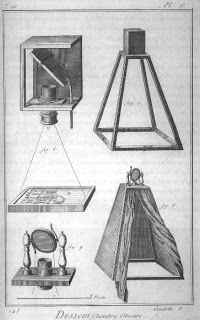
Camera Obscura (the Latin for dark room), the development of Ibn Al Haitham findings are based on the principle of capturing light reflected from an object.

Nevertheless partly his longer had "stolen" and "diceduk" by Western scientists without providing a reasonable appreciation to him. Indeed west should thank Ibn Haitham and his deep Islamic scholars without their chances European world was covered with darkness.

Ibn Haitham studies have provided the foundation for the development of science and at the same time his writings on the philosophy of thinking has proved the authenticity of Islamic scholars in the discipline are no longer shackled by the thought of Greek philosophy.


Ref :http://id.wikipedia.org/wiki/Ibnu_Haitham

thanks for your visit my blog biographyzone and for your reding this article Ibn Al Haitham Biography - Wise Men In The West
Description: Ibn Al Haitham Biography - Wise Men In The West
Rating: 5
Reviewer: 98827 review
Item Reviewed: Ibn Al Haitham Biography - Wise Men In The West

Mao Zedong Biography - Founder Poeple's Republic Of China

Mao Zedong Biography
Mao Zedong (Hanzi: 毛泽东) (born in Shaoshan, Hunan, December 26, 1893 - died in Beijing, 9 September 1976 at the age of 82 years), was a prominent philosopher and founder of the People's Republic of China. He is one of the most important figures in the history of modern China

Born in a poor peasant family, Mao since childhood to work hard and life is concerned. Although in later life increased family economic circumstances, but the misery in childhood that influenced later life. When small, Mao was sent to study at the elementary school. Childhood education also includes classical Confucian teachings. But at age 13, his father told him to stop going to school and working in the fields.

Mao rebellious and determined to complete his education so that he was desperate to run away from home and continue their education elsewhere.

In 1905, he joined the state exam at that time began removing the old Confucian ideologies; replaced by Western-style education. This marks the beginning of an intellectual uncertainty in China.

In 1911, Mao engaged in the Xinhai Revolution was a revolution against the Qing dynasty that resulted in the collapse of the Chinese empire that has ruled over 2000 years since 221 BC. In 1912, the Republic of China was proclaimed by Sun Yat-sen and China officially entered the era of the republic. Mao then continue their education and learn a lot of things, among other western cultures. In 1918 he graduated and then attended the University of Beijing. There he will meet with the founders of the Marxist CCP.

Mao and the party is
Mao in Yan'an in 1946

The party was founded in 1921, Mao and Mao are increasingly vocal. Between the years 1934 - 1935 he held the lead role and lead the Chinese Red Army undergoing "Mars Long". Then, since the year 1937 he joined the Army to help fight the Dai Nippon occupied many regions of China. Finally, World War II ended and the civil war flared up again. In the war against the nationalists, Mao became the leader of the Reds and eventually it won in 1949. On October 1, 1949, the People's Republic of China was proclaimed and the nationalist Chinese leader; Chiang Kai-shek fled to Taiwan.

In Mao CCP itself since 1943 and is chairman of the secretariat of the party Politburo but in fact it controls the rest of the party until his death in 1976. Leadership may not be vulgar cruel as Stalin but violence and behavior policies that arbitrarily himself brought the Chinese people plunged into ruin and misery incredible.

Philosophy of Mao
Mao Zedong in 1936

Mao is actually not an original philosopher. The ideas are based on socialism fathers such as Karl Marx, Friedrich Engels, Lenin and Stalin. But he had a lot to think about dialectical materialism is the basis of socialism and the application of these ideas in practice can be regarded as Mao done original. Mao could also be said of a Chinese philosopher whose influence is greatest in this 20th century.

Mao's most important philosophical concept is conflict. He said: "The conflict is universal and absolute, it is in the process of development of all goods and possess all the process from beginning to end." Model of history Karl Marx was also based on the principle of conflict: the oppressed class and the oppressed class, capital and jobs are in a eternal conflict. At some point this will lead to a crisis and the workers will win. In this new situation will eventually lead to a crisis yet, but logically all processes ultimately by Mao, will lead to a stable and harmonious balance. Mao thus argues that all conflicts are universal and absolute, so in other words are timeless. Mao's concept of conflict no resemblance to the philosophical concept of yin-yang. It all sounds like a dogmatic belief. Below is a snippet of his thoughts on the conflict.
Mao Zedong

In science everything is broken down by a particular conflict inherent to the objects of their research. Conflict thus constitute the basis of some form of scientific disciplines. Here can be presented a few examples: positive and negative numbers in mathematics, action and reaction in mechanics, electricity and negatifa positive in the physical sciences, attraction and repulsion in chemistry, class conflict in the social sciences, attack and defense in science war, idealism and materialism and dialectical perspective in metaphysics and philosophy of science, and so on. It's all research object science disciplines in different because each discipline has a specific conflict and the essence or gist of each.

Examples given by Mao Zedong on 'conflict' in different disciplines took from Lenin. Some of the analogies are appropriate but others do not. Numbers of positive and negative is a bad example of the dialectics of Marxism because of their differences are not dynamic: there are only the numbers of positive and negative that have emerged. Opinion Mao into doubt when he says that 'konflik'-' conflict 'is the' essence 'rather than science discipline concerned. Positive and negative numbers are not the essence of mathematical sciences, as well as metaphysics and dialectics is not the essence of philosophy. Mao is someone who is educated and understanding-understanding can be explained by the wrong because he was obsessed with the concept conflicts. This obsession also affect his political decisions as will be discussed in more detail below.
The concept of Yin Yang affect philosophical view of Mao Zedong.

Mao second important concept is the concept of the knowledge which he also took from Marxism. Mao found an advanced knowledge of the physical experience and that experience was the same as the engagement.

If you seek knowledge then you have to engage with the state of the changed situation. If you want to know how it feels a cashew, guava then it should be changed by way of eating. If you want to know the structure of the atom, then you must perform experiments of physics and chemistry to change the status of this atom. If you want to know the theory and metoed revolution, then you should follow. All true knowledge comes from direct experience.

Only after someone get experience, then he could jump to the front. After that pengathuan practiced back that makes people get to experience it again and so on. Here it was shown that Mao Marxism not only recognize but also understand neokonfusianisme as suggested by Wang Yangmin who lived in the 15th century to the 16th century.

The politics and policies of Mao

Mao distinguish two types of conflict; conflict of antagonistic and non-antagonistic conflicts. Antagonistic conflict can only be solved according to the battle alone while the non-antagonistic conflict can be resolved by a discussion. According to Mao conflict between the workers and the workers with the capitalists is an antagonist of the conflict while the conflict between the people of China to the party is a non-antagonistic conflict.

In 1956, Mao introduced a new policy in which intellectuals should expend their opinion as compromises to the party who pressed for wanting to avoid the violent suppression accompanied by the motto: "Let a hundred flowers flourish and hundred different thoughts contend." But ironically policy This political failure: the intellectuals are not satisfied and spend a lot of criticism. Mao himself argued that he had been betrayed by them, and his revenge. Approximately 700,000 members of the intelligentsia ditangkapinya and forcibly put to work in rural areas.

Mao believed in the eternal nature of a revolution. He also believes that every revolution inevitably produce the counter-revolutionaries. Therefore, he regularly combating and capturing what he considers his political opponents and the traitors or the counter-revolutionaries. The most dramatic event and the tragic events of the Cultural Revolution is the heart that occurred in 1966. In 1960 students around the world are in happy-happy rebel against what they consider the Establishment or the ruling. Similarly, in China. The difference in China they are supported by their teachers and dignitaries of the Party, including Mao himself. The students and faculty set up what is called the Red Guard, a paramilitary unit. Equipped with the Red Book of Mao, they attack the minions of capitalism and Western influences, and other counter-revolutionaries. As an example of their fanaticism, among other they refuse to stop on the highway when the red light is on because they believe that the color red, which is a symbol of socialism might not mean something to stop. So the members of the Red Guard in 1966 so blindly in combating the counter-revolutionary that the Chinese state in an extremely precarious and almost destroyed; ekonominyapun beaten path. Mao finally forced to People's Liberation Army to tackle them and block their fanaticism. The result was a civil war that only ended in 1968.
Mao Zedong
Mao Zedong Biography
Failure Mao

In 1958 Mao launched what he called the Great Leap Forward in which reorganized rural areas in total. Everywhere established associations villages (communes). Economically it turns out it's all failed. These communes into units that are too large and can not be terurusi. Estimated to be nearly 20 million people died in China at that time wasted

Mao Zedong and the UN
Mao Zedong proclaimed the People's Republic of China on October 1, 1949.

People's Republic of China was proclaimed by Mao since in 1949 was not recognized by the United States. United States continue to recognize the Nationalist Republic of China since 1949 only controlled island of Formosa or Taiwan and beyond. China since the founding of the United Nations in 1945 has become a permanent member of the Security Council along with the United States, United Kingdom, France and the Soviet Union (Russia) as the winner of World War II, continued to be represented as well. Just who is representing the nationalist government that ruled Taiwan is now only just. It is a strange time for the Chinese mainland was inhabited approximately 800 million people are not represented in the United Nations; representing only course which at that time Taiwan has a population of probably no more than 10 million people.

So at the end of the 1960s the president of the United States, Richard Nixon, began to approach the People's Republic of China and the Soviet Union ended with the approval of PRC to the UN Security Council began in 1972 and replaced Taiwan.

Legacy of Mao and the People's Republic of China is currently

In 1976 Mao Zedong died. After that the People's Republic of China to be more open. Normalization of diplomatic relations with Indonesia are also realized in 1992. At this time China appears as a giant just woke up from his sleep and rapid economic growth. Even China could surpass Russia in its development. Things contested now is whether all this can be achieved thanks to Mao services or because the effect is thin.

Ref : http://id.wikipedia.org/wiki/Mao_Zedong

Thanks for your visit and red this article Mao Zedong Biography - Founder Poeple's Republic Of China
Description: Mao Zedong Biography - Founder Poeple's Republic Of China
Rating: 5
Reviewer: 98827 review
Item Reviewed: Mao Zedong Biography - Founder Poeple's Republic Of China

Rudolf Diesel Biography - Inventor Of Diesel Engine


Rudolf Diesel Biography
Rudolf Diesel (March 18, 1858 - 30 September 1913) was a German inventor, famous for his invention, the diesel engine, he was born in Paris and died in mysterious circumstances on board ferry on his way to England. Diesel developed the idea of ​​a trigger compression engines of the last decade of the 19th century and received a patent for such a device on February 23, 1893. He built a working prototype in early 1897 when working at the MAN factory in Augsburg. Diesel engine is also named in honor of his services. Originally, he was named "engine oil".

Rudolf Diesel was born with the full name of Rudolf Christian Karl Diesel was born on March 18, 1858 in Paris, France, from a family of German craftsmen skin. Since childhood, he dekenal as a genius. At around the age of 20, in 1870, Diesel was awarded a bronze medal from the Société Pour L'Instruction Elémentaire, on several scientific works cemerlang.Tetapi, in the same year, the family was forced to leave Paris Diesel because of the new policy of the French government at the time of foreign immigrants. Diesel father failed to obtain permission to settle in France. They left and moved to London, England. Just a little while there, Rudolf later left alone to Augsburg, Germany, to attend school and live with his uncle and aunt who also teaches there as a teacher in Gewerbsschule. Soon the German-French War broke out.

In 1872, Rudolf began to be known and recognized as a candidate for a reliable mechanic. He completed his schooling at Gewerbsschule as one of the best graduates, then went to the University of Engineering (Polytechnic Institute) Muenchen. German-French war was over and for the first time she can get together and be reunited with his family in Paris.

Unfortunately, Rudolf could not attend the final exam scholarship, in 1879 after suffering an attack of dengue fever. However, during a lecture in Munich, he carved many brilliant achievements, among others, in 1878, with professors, managed to devise a blueprint steam engine with the highest efficiency ever until then. He also began to write several papers and published to the public. Immediately after recovery, instead choosing Rudolf began working as a mechanic at the company Sulzer in Winterthour, developing ice machine.

Finally, in 1880, Rudolf successfully complete the final exam's degree as a mechanical engineer and a graduate of the best ever produced by the Munich Polytechnic Institute throughout its history until now. After graduation, he decided to move settled in Paris and established a branch company ice machine there. He's even willing to work without pay. But a year later, 1881, the company appointed him as director of the factory in Paris, this is the year he first met with Heinrich Buz, Director of Machinery Augsburger, and they agreed to test and develop a system of clear ice pembuas machining. Rudolf year also received a certificate of his first patent on producing klareis findings in a bottle.
Rudolf Diesel
Rudolf Diesel
In 1883, Rudolf began to build a large ice factory in Paris. A year later, the ammonia engine development plan started. In 1886, plant spread its wings into Belgium. In 1887, the idea of ​​the machine for the purpose of absorbing ammonia medium scale enterprises began to materialize. This is when Rudolf prove the theory of electromagnetic waves at high rotation per second. In 1889, Rudolf industrial engineering exhibited in Paris, exhibiting ice machine and refrigeration. Rudolf later gave a public lecture at an international congress on applied machines. He earned a standing ovation and the company immediately offered him a contract Lindes based in Berlin since 1890.
First Diesel Engine

In 1892, Rudolf received his patent for the discovery of the workings of the internal combustion engine (internal combustion engines). Rudolf immediately start the project size dekmudian developed what today is known as diesel engines. And on August 10, 1893, Rudolf had managed to realize his dream of creating the world's first diesel engine. Upon finding it, he got a patent numbered 608,845. In the same year published his book "Theory and Construction of a Rational Heat Engine for Substitution of the Steam Engines and Combustion Engines Admitted that activity," through the publisher Springer, Berlin. At that time also, Rudolf signed a contract with Augusburger, Krupp and Sulzer, while publishing the next book, "The Theory og Nachtraege for the Diesel Engine".


Diesel Engine Rudolf Diesel first artificial
Early prototype engine The fair showcased at Chicago, the United States and got a pretty good. He continued experimenting. In 1895, the Commission adopted Patents that the machine is working fine creations. He moved to Munich, 1896. Until the beginning of the next year (1897), he completed the plans further discovery engine with four steps (4 stroke). But the company Deutz AG tried to match it. Rudolf Krupp support that eventually gave birth to an agreement between the Deutz, Krupp and Augsburger to help Rudolf conduct a series of final follow-up experiment to improve engine findings.

That year was a busy year for Rudolf. He traveled to Scotland, then to Paris to make an aircraft, signed a contract with Adolphus-shrubs, and then demonstrates an example of the engine in front of the public in Augsburg. Then memeberi public lecture in Kassel, inaugurated the diesel engine community organizing in Paris, but also facing a lawsuit over patent rights by Emil Captaine. Even had suffered a loss in a test laboratory. However, diesel engine factory at Augsburg finally built in 1898. Four examples of first production machine immediately exhibited in Munich highway Pekar and he successfully completed the first diesel engine with a compressor for the company Deutz AG. Temptation comes again. He had masu mental hospital in Neuwittelsbach, Muenchen. But first diesel engine plant in America was completed that year. Trials keep coming. In the following year 1899 the first factory in Augsburg closed because it failed to achieve the target production quantities. However, the same year the first diesel engine used in oil drilling field Gailizien. He fell ill more often.

then in the 20th century, precisely in 1900, the first diesel engine plant in London was inaugurated. The fair demonstration machine in Paris gained special attention and get the prize. Because more often ill, he moved to a fresh settlement in Munich in 1901. While a lot of rest, he wrote and published a new book is more philosophical than technical, entitled "Solidarismus: natürliche wirtschaftliche Erlösung der Menschen", in 1903, which clearly shows the attitude and outlook essentially as a genius engineer who is also concerned with issues social and environmental. Two years later, in 1905, began to be used as a diesel train engine. And peak performance in 1910 when he performed in Paris with Week highway design is driven by the diesel engine fuel beans and hash oil. Two years later (1912) when the speech received his patent on his new machine, dinia peling recorded statement about the future of the historic machines that run with fuel vegetable oil biodiesel is now known as the "Der Gebrauch von Pflanzenöl als Krafstoff unbedeuntend heute sein mag . Aber derartige Produkte können im Laufe der Zeit Petroleum obenso wichtig werden wie diese und Kohle-Teer-Produkte von heute. " (Use vegetable oil as a fuel for now seem insignificant, but in time it will be important nati, as petroleum and coal-tar products at present). Biodiesel engine was improved again by Ludwig Elsbett.
Diesel Engine
Diesel Engine
Rudolf Diesel died under mysterious and tragic in the English Channel, in 1913, fell and drowned under mysterious circumstances. Up to now it is not known for the tragic accident.

Ref : http://id.wikipedia.org/wiki/Rudolf_Diesel

Thanks for reading this article Rudolf Diesel Biography - Inventor Of Diesel Engine
Description: Rudolf Diesel Biography - Inventor Of Diesel Engine
Rating: 5
Reviewer: 98827 review
Item Reviewed: Rudolf Diesel Biography - Inventor Of Diesel Engine

Matthew Charles Mullenweg Biography - Founder Of Wordpress


Matthew Charles Mullenweg, known as Matt Mullenweg was born on January 11, 1984, in Houston, Texas - United States. In high school, Matt studied Visual and Performing Arts at the school and he was proficient on saxophone music. Although the study is not in the field of computer technology and programming, but Matt managed to establish and develop the software that is now well known that WordPress.com, Akismet, Automattic and its business.

Early Matt and WordPress

WordPress History began when Matt was 18 years old (in 2002). At the time, Matt was started with the blog b2cafelog blog. He uses blogs b2 (bbpress.org) to publish his photographs during a trip to Washington DC

However, several months later, bbPress blog where Matt stopped publishing his picture in developing software. Because of such conditions, there was some creative thinking from Matt. In January 2003, Matt Mullenweg announced via his blog that he will develop b2 blog that according to web standards at that time.

On their own initiative, with Mike Little Matt started memgembangkan WordPress coding based b2. Later, Mike and Matt with Michel Valdrighi (former developer b2), began to actively develop WordPress to WordPress was born as you know it today. On May 27, 2003, WordPress released version 0.70. Version 0.7 still has the same file structure as its predecessor, b2cafelog.

At the age of 19 years (March 2003), Matt GMPG colleagues established a more complex format than HTML. A year later, launched the facility WordPress Ping-O-Matic which is useful for sending notifications to ping blog search engines like Technorati. And now, Ping-O-Matic has served over 1 million pings per day.

Matt Mullenweg, Student DO (Drop Out)

In 2004, bad luck happened to Matt in the field of formal education. He dropped out and moved aka DO from Houston to San Francisco (California) to work at CNET for a year.

His job at CNET for a year is a period in the company's recent work Matt. Because at the age of 21 years, Matt has been 'early retirement' from the company CNET, and he spends his time working to WordPress. Not long out of retirement, he also managed to launch the application that serves Akismet blocked comments and trackbacks are identified as spam.

In the same year, Matthew decided WordPress is open to the general public worldwide in November 2005. In the same year, Matt Automattic launched the business enterprise that supports WordPress and Akismet.

Youth 22 years of Executive Recruit Yahoo

Matt's entrepreneurial spirit and maturity in developing WordPress and Akismet have exposed their business into a professional business. In 2006 (22 years), young Matt was able to recruit the former CEO of Yahoo! Oddpost and Senior Manager, Tony Schneider as CEO of Automattic. A few months after Tony Schneider was in Automattic, Akismet (the subsidiary), aged less than 2 years managed to earn U.S. $ 1.1 million in April 2006.

Success Matthew Mullenweg

Innovative thinking power and never give up on yourself a Matthew had brought him as a young millionaire. At the age of 25 years, Matthew Mullenweg has managed to become a young billionaire with a fortune of not less than USD 40 million (USD 400 billion).

He was also named the # 16 of "The 50 Most Important People in the World of Internet" by PC World in the year 20 07. From the list of 50 people, only Matt who was the youngest (23 years old).

With its unique facilities, fast and exciting, WordPress managed 'lure' millions of users. With the addition of thousands of bloggers and hundreds of thousands of new posts every day, WordPress made it into the 30 most active sites in the world. After receiving the Gravatar service in 2007, outstanding issues that enterprises established Matt, Automattic, offered up to USD 200 million, but Matt refused to sell it.


Ref : w2w3.blogspot.com/2009/01/biografi-serta-kisah-sukses-pendiri.html

Description: Matthew Charles Mullenweg Biography - Founder Of Wordpress
Rating: 5
Reviewer: 98827 review
Item Reviewed: Matthew Charles Mullenweg Biography - Founder Of Wordpress

Charles Francis Richter Biography - Inventor of Richter Scale


Charles Francis Richter Biography 
His full name Charles Francis Richter. Born on a farm in Ohio, USA, on 26 April 1900. At a relatively young age, 16 years old, he moved with his mother to Los Angeles, California. In this city seismological Richter was educated at the University of Southern California (1916-1917). After that, he moved to Stanford University to study theoretical physics and graduated in 1920. In his first alma mater, in 1927 he worked in the seismology laboratory in Pasadena, California. A year later he married Lilian Brand.

In 1928, Richter holds a doctorate from the University of California Institute of Technology (Caltech). At this university Richter achieved fame. At Caltech also, with Beno Guetenburg, in 1935 Richter developed a way to measure the size of the earthquake, which is what became known as the Richter scale. That is based on the amplitude magnitude earthquake is recorded by means of Wood-Anderson seismometer type at a certain distance from the earthquake source. In principle, the magnitude of the earthquake magnitude is proportional to the amplitude and inversely proportional to the distance to the earthquake source tools.

Elaborate on the Richter scale earthquake strength with numbers in the range between 0-9. That is, the number 9, as happened in the earthquake that caused the tsunami in Aceh on December 26, 2004, is the highest and rare.

Although at first, in the 1930s, the unprecedented magnitude earthquake greater than magnitude 8.9, the scale is still used. Figures obtained by measuring the magnitude of earthquakes greatest amplitude in microns (10-6 m = 10 to the power minus six) on the seismograms. Designed with a standard seismograph distance as far as 100 km from the epicenter. From there it gained logarithm earthquake.

In addition to making the scale used to measure the strength of an earthquake, Richter also wrote textbooks for seismic. Among others Elementary seismology (195 8) and the seismicity of the Earth (1954) is written with colleague, Beno Gutenberg. Together Frank Presso, Beno Gutenburg, and Hugo Benioff-three scientists and seismologists at the California Institute of Technology (Caltech), United States-Richter is known as the Father of Seismology (The Fathers of seismology).

Richter claimed that he developed a scale obtained by accident while working on the task for theoretical physics PhD under Dr. Robert Millikan. "He (Millikan) offered me to work in the laboratory under seismic Harry Wood," he said. Eventually that's where he got the data that maketh the determination of the legendary Richter scale. At first, the Richter scale used to measure the relative strength of an earthquake in California. Today, the scale of it (in a modified form) are used to measure earthquakes around the world.

Charles Francis Richter 
Richter was not the first to make a determination of the magnitude scale earthquake forces. Previously existing Giuseppe Mercalli, an Italian scientist, who studies volcanoes and created Mercalli scale. On the Mercalli scale, the earthquake intensity is measured with a scale consisting of 12 points. Mercalli scale measures an earthquake of reports of people who see the damage and interviewed survivors. Therefore, the Mercalli scale is very subjective and not as accurate as the Richter scale so as to measure the strength of the quake until now still used on the Richter scale. Since the 1960's also introduced moment magnitude scale is more accurate.

Long before Richter was born, a prototype scale earthquake damage scale 10 levels, have been developed and the Rossi Forel 1883. After that, in 1897 came the Mercalli scale when it is still using the same scale as Rossi and Forel, 10 levels. Cancani in 1904 further develop longer range of the scale to 12 points. After that, Sieberg went on to analyze the effects and descriptions of building damage and make it accepted as an international scheme in 1917. Since then, the scale is called scale-cancani Mercalli-Sieberg and used worldwide. However, since 1964, the experts use more Mercalli scale that has been updated.

Scale also made the Japanese earthquake. Because the position and geological conditions, the country is often hit by earthquake damage. No wonder then if the Japanese earthquake experts creatively creates its own earthquake scale, which is different from the earthquake Mercalli scale. In 1900 appeared Omori scale that measures the strength of the earthquake at seven levels of damage. However, the scale is then modified to only six levels alone. Omori scale measuring earthquakes based on the level of damage. Score one for measuring earthquake obvious, but not dangerous. While the figure of six to measure the destructive earthquake.

Richter died in Pasadena, California, USA, on 30 September 1985. Although gone, the name and services will remain distinct people. As a token of appreciation to the researchers in the field of kegempabumian, starting in 2005 were awarded in the form of Richter Award. Dr. Emily Brodsky of the University of California, Los Angeles, was chosen as the first recipient of the Richter Award. Emily ceremony to be performed in an annual meeting in 2006. The committee chose Emily on the consideration that his research on how earthquakes, volcanoes, and landslides occurred, is considered very innovative and prominent. (Syarifah / from various sources) ***


Ref : http://klipingut.wordpress.com/2008/01/02/charles-francis-richter-1900-1985-tak-sengaja-temukan-skala-richter/
Description: Charles Francis Richter Biography - Inventor of Richter Scale
Rating: 5
Reviewer: 98827 review
Item Reviewed: Charles Francis Richter Biography - Inventor of Richter Scale

Louis Braille Biography - Inventor Of Braille Code


Louis Braille
Louis Braille was born on January 4, 1809 at Coupvray, a small town near Paris, France. He lives with his father, Simon Rene Braille and his mother, Monique, in a modest house. His father was a shoemaker and leather gear that worked in the workshop of his own. Little Louis love playing in his father's workshop. At the age of 4 years, while fun to play working tools of his father, he had an accident. Jara, a sharp tool to puncture the skin, accidentally injuring an eye.

Infection in the injured eye in quickly spread to the other eye and cause blindness in both eyes.

Although I could not see, little Louis managed to show a strong willingness to learn. Parents Louis with local school teachers saw great potential in him. Therefore, when entering school age, he was allowed to attend the class - with her friends who berpenglihatan normal - by relying on the sense of hearing. Apparently, he could follow the lessons well. The only obstacle, he can not read and write except to the extent the lesson to listen to what the teacher orally.

At age 10, he obtained a scholarship to study at the Royal Institution for Blind Youth in Paris, a special educational institution for blind children. There, he learned to read letters embossed on paper by merabanya. At this school there are also several books with embossed system provided by the school's founder, Valentin Haüy. These books contain large letters embossed on each page. Due to the size of the letters are large, the size of the book was fairly large, so the price is very expensive. School only has 14 books such as this.

Young Louis patiently managed to "gobble up" all the books in the school library. Louis Braille can feel each embossed lettering on the books, but it is quite time-consuming to read and understand every sentence. It takes a few seconds to identify a word and when it has reached the end of a sentence, he often forgot what he had read at the beginning of the sentence. Louis believes there must be an easier way so that the blind can read quickly and easily as one can see.

One day in 1821, a French army captain, Charles Barbier, visiting schools Louis. Barbier presented his findings, called night writing (writing the night), a code that allows forces to share secret information on the battlefield without having to speak or turn on the flashlight to read it. This code consists of 12 raised dots that can be combined to represent letters and can be felt by the fingertips.

Unfortunately, the code is too complex for the majority of his troops that formally rejected for use in his unit, but not for 12-year-old blind student, Louis Braille. Young Louis soon realized how the point system arises it will be very useful if he manages to simplify it. After the visit Barbier, he seriously experimented with generating systems raised different points. In three years, at age 15, he eventually managed to build an ideal system now called wide, using a 6 cell based point and normal spelling.
Code braille
Each Braille character or cell consisting of six dot positions arranged in two columns, each containing three point positions so as to form a rectangle. One or more points may result in one or more of the six positions that point to represent letters of the alphabet, punctuation, or a certain number. Louis Braille find 63 combinations arise that might point arrangement. Did he stop there?

No. He even continued to develop this system in the following years and successfully added symbols for math and music. In 1829, Louis Braille published the Method of Writing Words, Music and Plain Song by Means of Dots, for Use by the Blind and Arranged by Them, the first braille book ever published in the world. The blind read Braille by moving their fingertips over the raised dots that. They can write on a wide range of paper over a 6 key called braillewriter (braille writer) using stytus, such devices without ink pens pointy edges.

Finally, Louis Braille became a teacher at the school where he was once a pupil, Royal Institusion for Blind Youth. He was a teacher who liked and respected his students. But unfortunately, he did not get to see a read-write system findings are used widely throughout the world. On January 6, 1852, at age 43, he died of tuberculosis.

At first, people did not think that the braille code is something useful for the visually impaired. Many people who suspect braille system was going to die as the inventor. Thankful there are few people realize the importance of the discovery of Louis Braille. In 1868, Dr. Thomas Armitage led a group of visually impaired people - consisting of four people - set up institutions to develop and disseminate the findings of Louis Braille system. This small group continues to grow and evolve into the Royal National Institute of the Blind (RNIB), now known as the largest publisher of books range in Europe. Louis Braille brilliant inventions have changed the world of reading and writing for the blind forever. Now, the braille code has been adapted into nearly every written language in the world. Louis has proven that with a strong motivation, we can do things that previously did not make sense. ***

Geri Achmadi
Books Editor, Alumni Faculty Unpad


Ref : http://klipingut.wordpress.com/2008/01/02/louis-braille-1809%E2%80%931852/
Description: Louis Braille Biography - Inventor Of Braille Code
Rating: 5
Reviewer: 98827 review
Item Reviewed: Louis Braille Biography - Inventor Of Braille Code

Edwin Howard Armstrong Biography - Inventor Of Radio Waves


Armstrong was born on December 18, 1890 in New York City, United States (U.S.). Ingenuity and tenacity have appeared since childhood. In fact, when he was only stepping 14 years, he has been aspiring to become an inventor. As a teenager, he started trying to be a service person household appliances cordless (wireless), and while in high school, he began a trial by making the antenna mast in front of his house to study wireless technology at that time often experienced interference. He was quickly able to understand the problems in the communication device.

He can also find weaknesses transmission signal at the receiving end of the communication. In fact, there is no other way to strengthen the power at the sending end.

To develop knowledge on the issue of communication wave, after graduating high school, Armstrong entered Columbia University majoring in engineering. At the university that he continued his research in the field of wireless. In the third year at Columbia University, Armstrong introduced the findings, such as the first radio wave amplifier (radio amplifier). Radio itself is already discovered first by Lee De Forest Audion tube using a tube called Lee De Forest. However, the radiated wave is still too weak.

Armstrong learned how the tubes Lee DeForest and then redesign by taking the electromagnetic waves coming from a radio transmission and quickly signaled back through the tube. Just for a moment, the signal strength will increase as much as 20,000 times per second. This phenomenon is by Armstrong called "regeneration radio", which is an important finding and needs to be there when the radio first. With this development, the radio technician does not require a 20 ton generator again to their radio station airs. Single circuit design becomes the key findings Armstrong continuity wave transmitter is the core radio operations. And he graduated bachelor of engineering in 1913. Upon these findings, Armstrong patented his creation and give the license to the Marconi Corporation in 1914.

Six years later, Westinghouse bought the patent rights Armstrong superheterodyne receiver, and start their work became the first radio station KDKA in Pittsburgh named. Begin radios became very popular at the time, ranging from entertainment to breaking news, nothing to wear radio services. After that, kept popping up more radio waves. RCA (the Radio Corporation of America) promptly purchase all radio patents as well as other radio come buy.

After World War I ended, Armstrong returned to Columbia University and worked as a professor at the university. In 1923 he married Marion MacInnes, secretary of the president of RCA, David Sarnoff. In that decade, he was involved in the battle to control the company's radio patents. This continued until the early 1930s, and Armstrong lost in court. However, he continued to research to solve the problem of radio statistics. He concluded, there is only one solution that has stolen his work can be appreciated, which is designing a completely new system.

Study after study continues to do to further refine his radio voice. In 1933 Armstrong introduces radio system FM (frequency modulation), which gives crystal clear reception even though there was a storm and offers high sound accuracy not previously exist. The system also provides a single wave with two radio programs with a single haul. The development is called multiplexing.

Regarding the difference between AM and FM waves, can be explained as follows. Voice signals can not be directly emitted as sound signals instead of electromagnetic waves. If the voice signal is converted into electromagnetic waves though, how long the antenna is needed. To be able to transmit voice signals more easily, the sound signal is superimposed on the first radio signals with a frequency higher than the voice signal. Method for laying sound signal on a radio signal is called modulation. Modulation radios are often used amplitude modulation (AM - amplitude modulation) and frequency modulation (FM - frequency modulation)

The main diff between an AM to FM is a way to modulate his voice. FM wave has an additional range of 455 KHz plus. So, if there frekeensi 88.00 FM radio, he actually used the frequency 88.00 MHz + 455 KHz. Why is there an additional 455 KHz? Well, that FM waves modulate digital sound. Thus, the audio sound waves digitally chopped corresponding audio frequency (ear thresholds between 6 Hz - 20 KHz). After digitally chopped (optional 455 KHz was, as digital audio buffer), digital signal TSB. on-mix with radio waves (carrier) frequency 88.0 MHz were before, and then thrown into the air. Important this part of the system is the FM transmitter antenna, transmission line, and the transmitter itself.

To introduce his findings to the world, in 1940, Armstrong received permission to establish the first FM radio station established in Alpine, New Jersey. Thanks to these findings, in 1941, the Franklin Institute has honored Armstrong Franklin medal form, which is one of the highest honors the scientific community. Defeat in dispute for years with companies that have made use of the copyright, does not affect the provision of the Franklin medal.

Unfortunately, Armstrong had to end his life with tragic way. The inventor of FM radio waves are found committed suicide in 1954. His wife, Marion MacInnes, who became heir to the findings of Armstrong continued her struggle fought in court and won millions of dollars. Top sound clarity produced in the early '60s, FM channel radio system dominates, and even used for communications between Earth and outer space by the U.S. National Space Agency, NASA. (Desy Natalia / multiple sources) ***
Edwin Howard Armstrong Biography - Inventor Of Radio Waves


Ref : http://klipingut.wordpress.com/2008/01/02/edwin-howard-armstrong-1890-1954-penemu-gelombang-radio-fm/
Description: Edwin Howard Armstrong Biography - Inventor Of Radio Waves
Rating: 5
Reviewer: 98827 review
Item Reviewed: Edwin Howard Armstrong Biography - Inventor Of Radio Waves

Samuel F.B Morse Biography - Inventor Of Telegraph And Morse Code


Samuel Finley Breese Morse, that's his full name, was born on 27 April 1791 in Charlestown, a suburb of Boston, Massachusetts. Since the age of four, Morse is excited draw. When he was four years old, he tried to draw his teacher's face. At step 14, he tried to collect pocket money by drawing faces of his friends and the people in the city.

While studying at Yale College, Morse was not good students. His interest in science while attending arise about the latest developments on electricity. However, he felt more comfortable when drawing a miniature portraits. One day, he sent a letter to his parents, about his desire to become a painter.

His father and his mother worried that he can not make ends meet by becoming a painter. So they told him to be a seller of books.

Finally, Morse worked as a bookseller, but at night he's still painting. His parents aware of the love of Morse on the art world. They try and find and collect money to send Morse at an art school in London.

When Samuel Morse was at the Royal Academy in London, his teacher always said, he's always not complete tasks. He has approximately 20 task he completed the picture yet. Morse still make this mistake over and over again until the teacher is often advised.

Finally, he tried to make a model of a statue of Hercules which is made of clay in the classroom. The teacher really liked the statue and told Morse to mengikutkannya in a race. Unmistakable. He also won a gold medal for his work. Confidence is high, making Morse managed to find what works best for him. He began to try again to draw pictures of people in Europe.

**


In 1818, he married and later had two sons and a daughter. Turns out life is not easy. No one gave him money for his paintings until the results of Morse did not have any money at all. In 1825, his wife died from a heart attack. Morse did not even know what happened to his wife, and when his wife died. He was always sad and makes almost gave up to keep painting.

After that, Morse and several other painters tried to establish the National Academy and he became the first president. He worked as a painter from seven in the morning until midnight. He had chosen as a painter in the round room in the Capitol, USA.

One of four paintings that lined the walls were the result of his work. After that, he was with the children and sister-in-law returned to Europe to continue his career as a painter.

In October 1832, Morse and his family sailed back home from Europe by ship named Sully. At that time, Morse heard conversations about the newly discovered electromagnet research, and later appeared in his mind about the concept of electric telegaf.

He managed to create the first telegraph model in 1835, which operated in the building of New York University, where he taught art. Because of the poor, he made the model of abrasive materials such as old easel stand, homemade batteries, and the old clock to move the paper line and a point will be recorded.

KODE MORSE


With the help of friends, Morse filed a new patent for the telegraph in 1837, which was given an explanation, including a password that consists of dots and dashes to represent numbers, a dictionary to convert numbers into words, and a set of types sawtooth signal to send. Morse was not satisfied with his artistic career, has given all his time to the telegraph.

Morse died of pneumonia in New York, on 2 April 1872, at the age of 80. He was buried in Greenwood cemetery, Brooklyn. (Various sources) ***

Yayan Sofyan Suri,
Alumni Faculty IPB.


Reference :
http://klipingut.wordpress.com/2008/01/02/samuel-morse-semula-menyukai-melukis-beralih-ke-elektromagnet/#more-618

Set Biographies Famous People and Complete Leaders: www.biographyzone.blogspot.com
Description: Samuel F.B Morse Biography - Inventor Of Telegraph And Morse Code
Rating: 5
Reviewer: 98827 review
Item Reviewed: Samuel F.B Morse Biography - Inventor Of Telegraph And Morse Code

Antoine Laurent Lavoisier Biography - The Father Of Modern Chemistry

Antoine Laurent Lavoisier (1743-1794) At the time of his birth in Paris in 1743, far behind the chemical sciences rather than physics, mathematics and astronomy. A large number of discoveries that operate independently discovered by many experts in chemistry, but no one could be a theoretical framework that can handle summarizes the information separately. At that sort of confidence did not spread to ensure that water and air are the elementary substance.

Even worse, a misunderstanding of the essence of the fire. Growing belief then was that all of the combustion process contains objects speculation substance called "phlogiston," and that during the process of combustion, releasing flammable substance phlogiston stuff her into the air.

In the period between the years 1754 - 1774, talented chemical experts such as Joseph Black, Joseph Priestley, Henry Cavendish and others have isolated the importance of gases such as oxygen, hydrogen, nitrogen and carbon dioxide. However, since these people accept the theory of phlogiston, they did not understand the nature or significance of the chemical substances they find. Oxygen, for example, is seen as the air that all its phlogiston had been diverted. (As we know that the more perfect the wood chips burning in oxygen than in air, perhaps this result is easier to suck air from the wood latest phlogiston). Obviously, the real advances in chemistry can not occur before the main basics can be understood.

The Lavoisier successfully and handle the parts puzzle into a single unit that can be justified and find the right direction in theoretical chemistry. In the first phase, said Lavoisier, phlogiston theory completely misses: there is no such thing as phlogiston objects. The process consists of a combination of chemical combustion of burning stuff with oxygen. Second, the water is not at all elementary stuff but the mixture of oxygen and hydrogen. The air is not too elementary substance but consists primarily of a mixture of two gases, oxygen and nitrogen. All of these statements now seem obvious now, but can not be captured well by Lavoisier's predecessors and contemporaries colleagues. Even after Lavoisier formulated his theory and proposed to the scientific community, yet still many princes chemist who rejected the idea of ​​this theory. However, books are brilliant Lavoisier Basic Principles of Chemistry (1789), so bright and crystal clear and the hypothesis put forward very convincing and outperformed the opinions of others, then the chemical experts younger generation quickly believe it.

As proved that water and air are not chemical elements, Lavoisier also include in his list of substances the objects are considered fundamental and meaningful rudimentary though the list contains several errors, the list of modern chemicals present in essence an extension of what is already prepared Lavoiser it.

Lavoiser have compiled the first scheme neatly arranged on the chemical system (in collaboration with Berthollet, and Guyton de Morveau Fourcroi). In Lavoisier's system (which became the basis of the handle until now) the chemical composition is described by its name. For the first time acceptance of a uniform chemical system is described that allows chemists around the world can relate to each other in terms of their inventions.

Lavoisier was the first to clearly put forward the principles of safe amounts of chemical reactions without some form of objects: the reaction can set back the correct element in the substance of the original but nothing is indestructible, and the end result is the same weight as the original components. Lovoisier beliefs about the importance of accuracy weighing of chemicals involves chemistry reaction that converts into an exact science and also paved the way for many advances in the field of chemistry in the decades afterward.

Lavoisier also contributed in the field of geological investigations, and also contribute to weight convincing in the field of physiology. With the experiment very carefully (in collaboration with Laplace), he was able to show that the physiology of the sweat or drenched in sweat is basically the same as the slow combustion process. In other words, human and animal people draw their energy from organic combustion process slowly from within, with the use of oxygen in the air dihimpunnya. This discovery-that might be equivalent to the discovery of the importance of Harvey on the circulation of blood is enough Lavoisier seat role in this list. In addition, Lavoisier had crucial significance thanks to the formulation of the theory of chemistry as a starting point for the sector unshakable knowledge of chemistry on the right track. He is generally regarded as the "founder of modern chemistry", and indeed he deserves that title.

"List of Periodic Elements" which is basically a modern extension of the list of Lavoisier As well as some of the figures listed in this list, Lavoisier actually studied law at adolescence. Although he may be appointed a law degree and legal experts in the environment, but not once did he ever practice his knowledge, though there he dabbled in the world of French administrative offices and public affairs services. But above all he was active in the French Royal Academy of Sciences. He is also a member of Ferme Generale, an organization engaged in the world of tax matters. Consequently, after the French Revolution of 1789, the revolutionary government very suspicious.

Eventually he was arrested, along with twenty-seven members Ferme Generale. Court revolution might not be too careful, but the inspection process goes quickly. On the morning of May 8, 1794 the twenty-seven men were tried, convicted and beheaded by guillotine. Lavoisier can live forever with his wife who always helped in intelligent workplace investigations.


At the time of trial, there is a request for the case to Lavoisier separated, as he put forward a number of community service he's done for the community and science. The judge denied the request with comments where "Republicans do not need a genius." Great mathematician Langrange sharply and appropriately defend his friend: "It takes an instant to cut off a head, but not quite a hundred years to put in place such head before. "

ANTOINE LAURENT LAVOISIER 1743-1794

Taken from:
One Hundred Most Influential People in the History
by Michael H. Hart, 1978


Reference :
 http://www.googlebottle.com/tokoh-dunia/antoine-laurent-lavoisier-tokoh-dunia.html
Set Biographies Famous People and Complete Leaders: www.biographyzone.blogspot.com
Description: Antoine Laurent Lavoisier Biography - The Father Of Modern Chemistry
Rating: 5
Reviewer: 98827 review
Item Reviewed: Antoine Laurent Lavoisier Biography - The Father Of Modern Chemistry